AI automation for businesses in Formentera and Ibiza
If your team repeats the same tasks every day, that can be automated. Quotes, replies, bookings and internal control, custom built with AI.
Where I workFormenteraIbizaIslas BalearesEspaña
In almost every business I work with there's a task that repeats every day and that nobody has ever counted.
Answering the same three questions on WhatsApp. Moving data from an email into a spreadsheet. Preparing a quote by looking up prices in four places. Letting the team know a booking came in.
None of those tasks is hard. The problem is they take the hours you should be spending on something else.
That can be automated.
What I automate
Support and replies. An assistant that answers the questions that repeat, with the real information from your business. Anything a machine shouldn't answer goes to a person.
Quotes and prices. When the price depends on several variables, working it out by hand is slow and gets things wrong. A custom calculator solves it on the spot.
Bookings and contracts. What today goes through the phone, paper or memory, turned into a process that leaves a record.
Moving information around. So what comes in one place shows up where it has to without anyone copying it by hand.
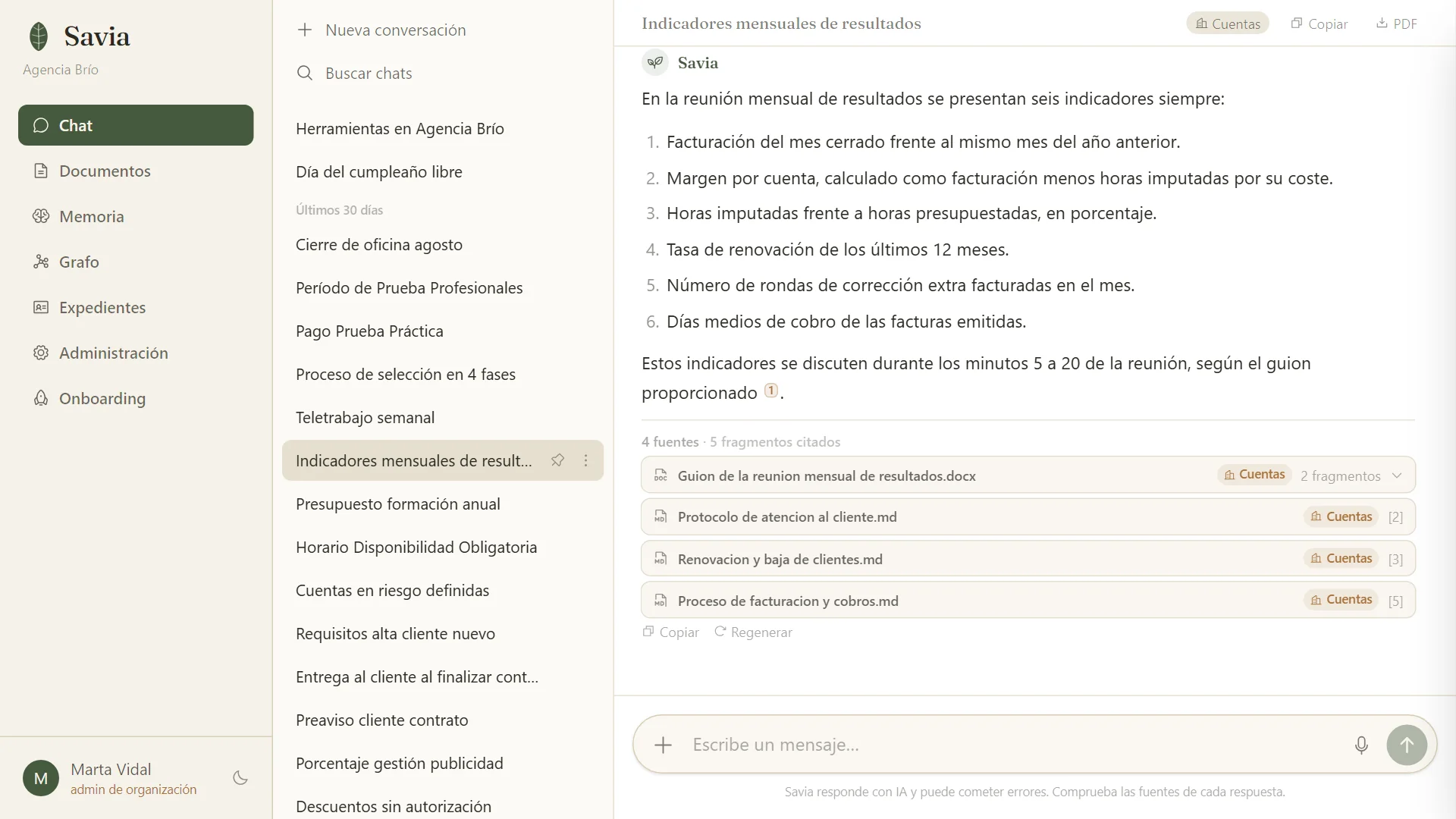
Internal knowledge. When the team depends on one or two people for the day-to-day questions. I'm building a whole product around this, and I get into it just below.
Since day one of ChatGPT
I started with ChatGPT when it came out, in November 2022, and I haven't stopped a single day since. I didn't try it and find it interesting: I put it into how I work, and there it stayed.
Since then I've kept up with every model and every tool that has come out. Not out of a taste for novelty, but because in this field what was true six months ago isn't any more, and anyone not following it closely ends up recommending things that stopped making sense.
I use it every day in my own work before I ever propose it to anyone. That's what lets me tell you, from experience, what's worth it and what's smoke.
And it shows in the volume. Today, on my own, I deliver projects that five years ago would have needed a team of five or six people. Not because I type faster, but because the slow, repetitive parts stopped eating the day.
The furthest I've taken this is Savia, my own product: a second brain for companies. It knows how the business actually runs — the processes, the decisions, the reason behind each one — and answers anyone on the team instantly, always with the source in view. And it doesn't sit still: when someone asks about something the company hasn't written down yet, it spots the gap, asks the person who knows, and takes the answer in. It keeps learning on its own.
So when someone on the island asks me whether AI is any use to them, I don't answer with an opinion. I answer with what I've been doing every day since 2022.
How I start
I look at where the time goes. Before proposing anything, a conversation to see which tasks repeat and how many hours they take. Often the process that hurts most isn't the one people think.
I start with one. The one that eats the most time or causes the most errors. We get it running, measure it and then decide whether to continue.
It's measured with your numbers. Hours before and hours after. If they don't go down, it didn't work, and I'd rather see that on the first process than on the fifth.
I connect what you already use. Without forcing the team to learn a new tool unless it's genuinely necessary.
What I'm not going to sell you
I'm not going to tell you AI will transform your business.
What it does is concrete and boring: it removes the tasks that repeat. The team stays the same, with more time for the work that does need a person.
AI doesn't save you hours. It saves you paying twice for the same mistake.
And if I look at your case and see that what you need isn't automation but a tidier way of working, I'll say so. Automating a broken process only makes it break faster.
Getting started
Write to me and tell me which task is eating your day. That's enough to see whether automating it is worth it or not.
If it isn't, I'll say so. It's cheaper for both of us.
Frequently asked questions
What can be automated in a small business?
+
Almost anything you do the same way more than ten times a week. Answering the same questions on WhatsApp or email, preparing quotes, moving data from one place to another, alerting the team when a booking comes in, generating contracts or invoices. The rule is simple: if you always do it the same way, it can be automated.
Will I have to change the tools I use?
+
In most cases no. The normal thing is to connect what you already use instead of replacing it. Switching tools has a learning cost that almost never pays off.
Is automating with AI expensive?
+
The cost depends on how many processes you touch. The way to know if it's worth it is to count the hours your team loses on that task each month and compare. If the numbers don't add up, I tell you before we start.
Will the AI make up answers in front of my clients?
+
Not if it's built properly. What I do is make the system answer only with the information from your business, and say it doesn't know when it doesn't know, instead of filling in the gaps. And when the answer is delicate, it hands over to a person.
Will my data stay safe?
+
It's the first thing decided on every project: what information goes into the system, who can query it and where it's stored. We talk about it before touching anything, not after.
How long until it's running?
+
A single automation can be live in days. A system that touches several processes takes weeks. I prefer to start with the process that hurts most, get it running and measure it before moving on.