saviaia.es
Savia IA.
Overview
Savia IA is the digital company brain I founded, designed and built. It gathers what the team knows (documents, conversations and the judgement of senior people) and answers in an AI chat that always cites its source. This page explains how it is built; what it does for a company and how to hire it is on saviaia.es.
It started with a problem I saw while working for a packaging factory in Slovenia: a quote took three or four days because it depended on one person's undocumented knowledge. Almost every service company works the same way. Two or three people know how things are done, and when they are away, the work slows down. Savia is built for agencies, consultancies and software companies with 20 to 200 people, and its target is tacit knowledge: what someone knows how to do but has never written down.
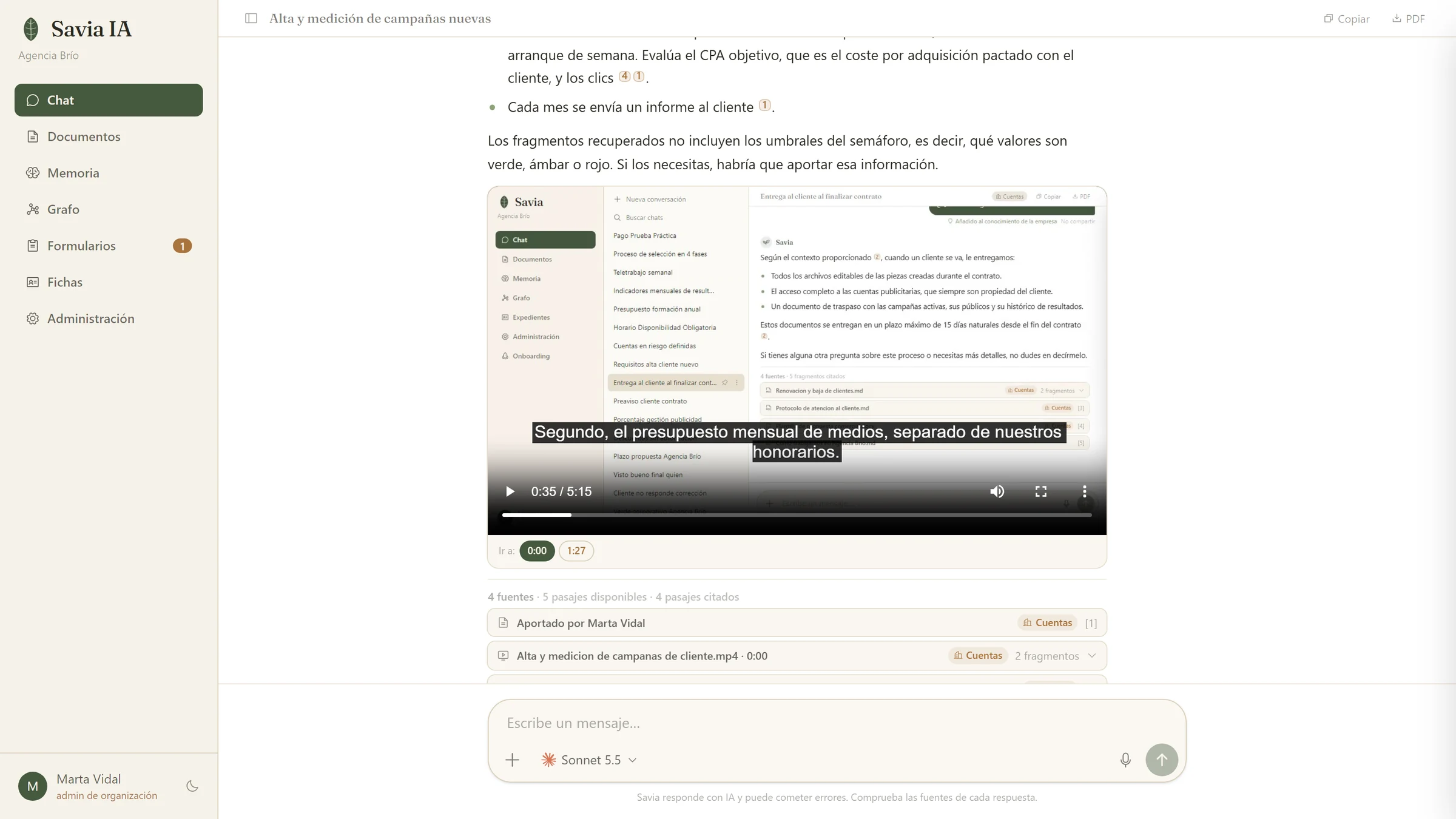
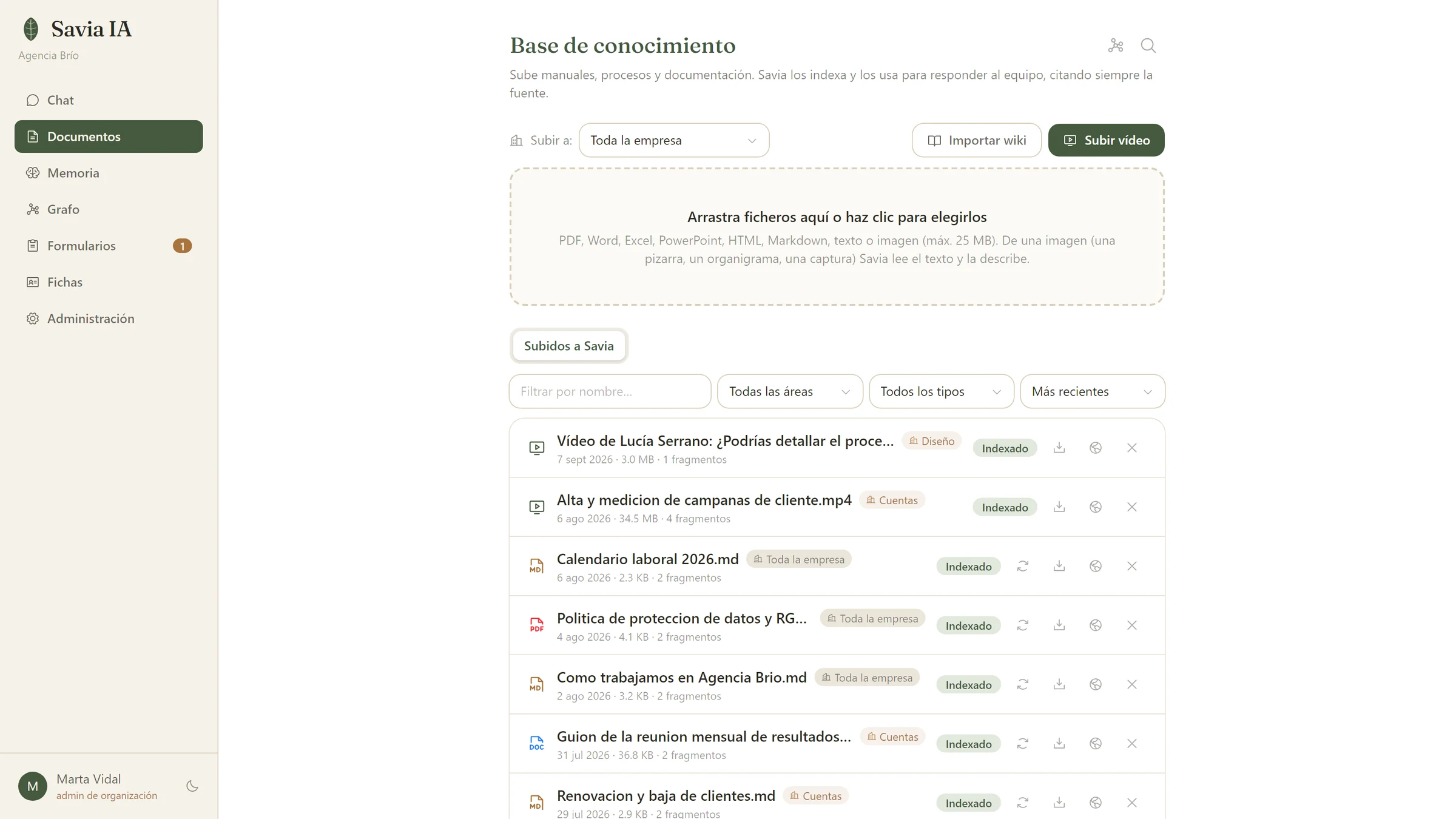
The team asks in their own words and Savia answers with the company's sources: the document, a colleague's contribution, an expert's answer or the exact minute of the video where it is explained. If the knowledge does not answer it, Savia does not make it up: it says so and logs the gap. A similarity threshold alone cannot decide that, so I use a reranker as a gatekeeper and measure every change against a question benchmark that runs weekly in CI. It also reads images, such as an org chart or a photo of a whiteboard, and cites them like any other document.
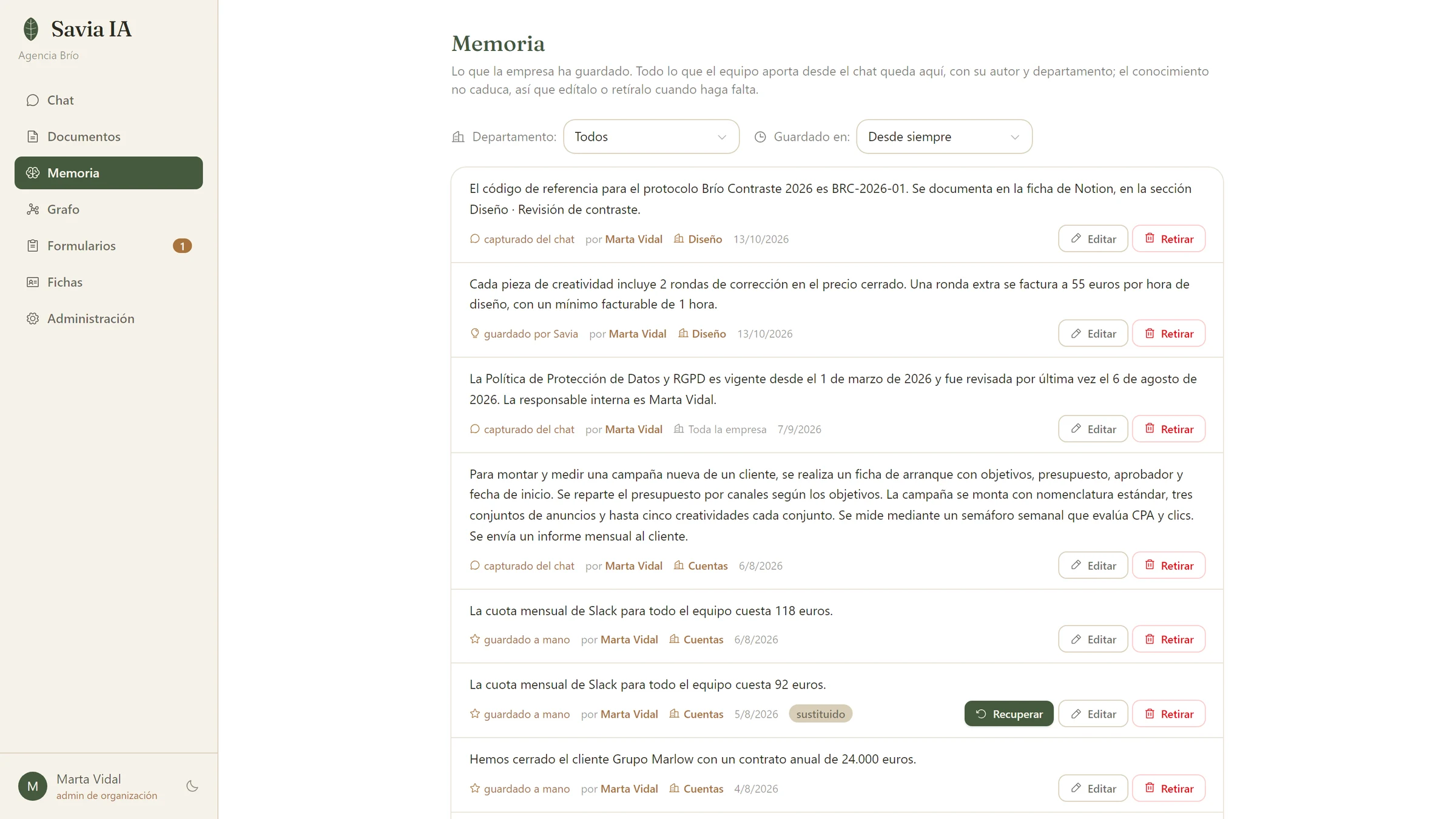
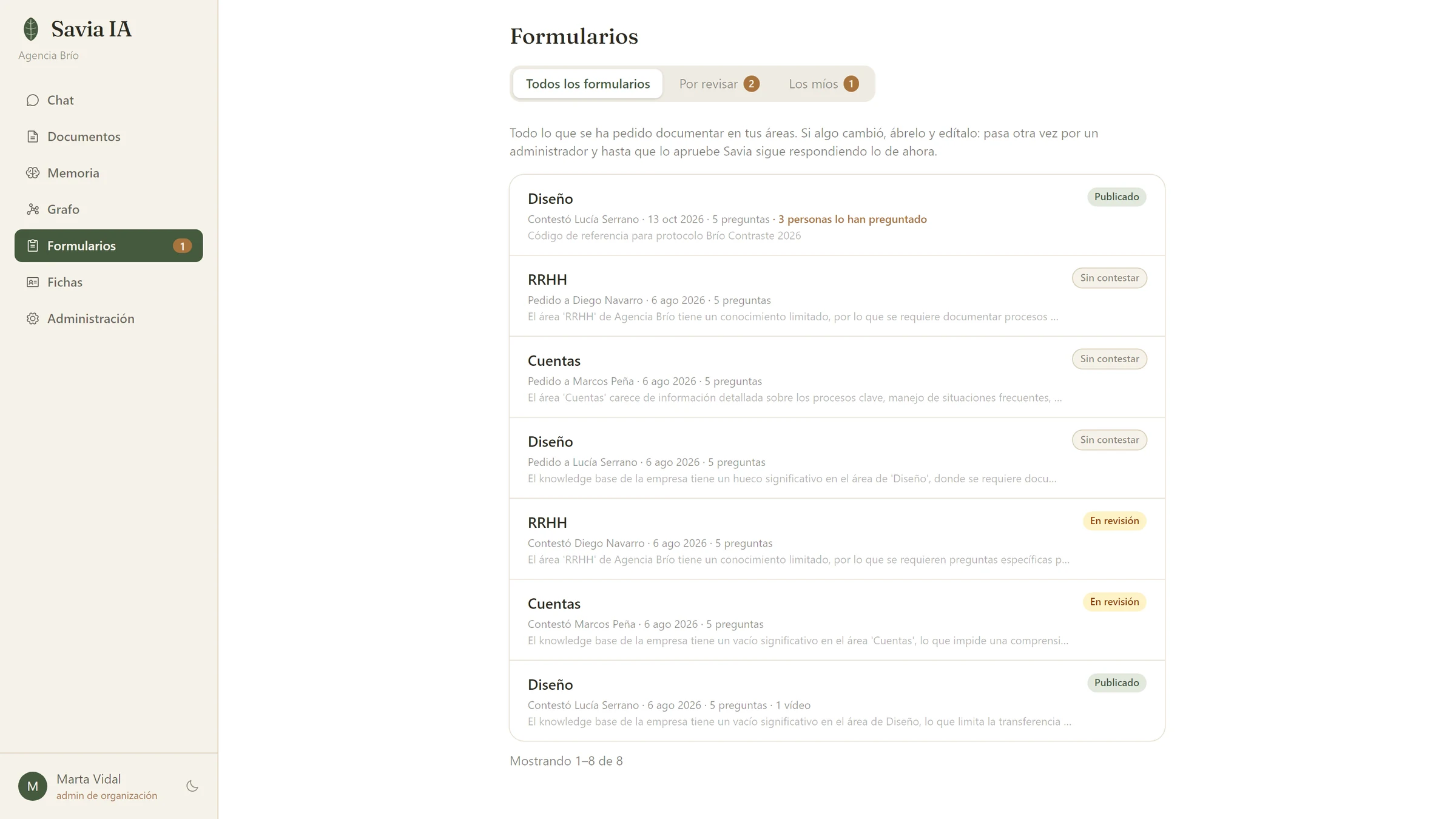
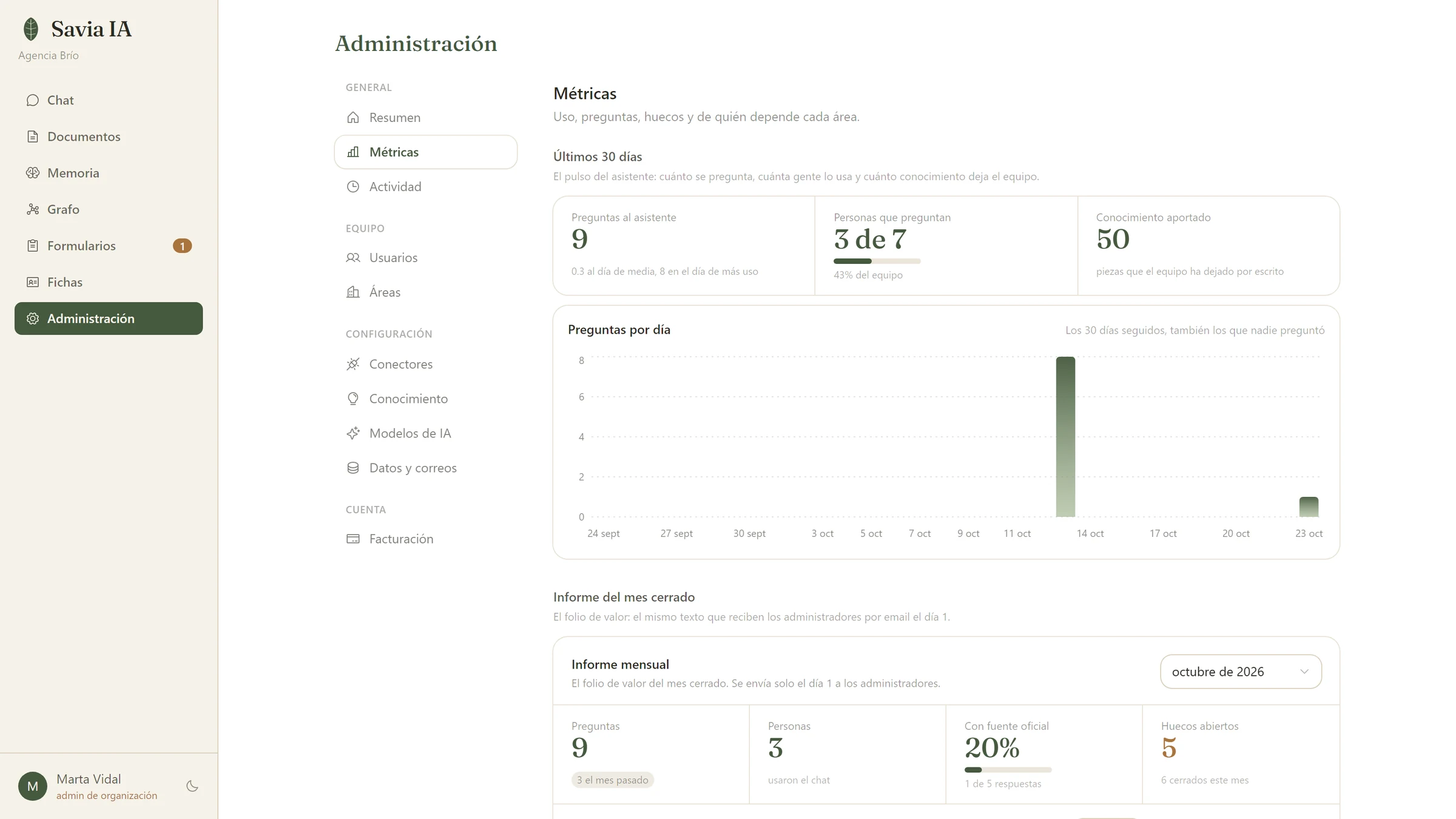
What is missing becomes work. Unanswered questions are grouped by topic and, when they repeat, Savia sends a form to the area's expert. The expert answers in writing or by recording their screen; an administrator reviews it and, once approved, it enters the knowledge base and the people who asked are notified. Savia also captures what the team states in the chat, keeps who said it, merges duplicates and replaces what has changed. It learns by adding reviewed knowledge, without retraining any model.
Keeping knowledge true is the hardest part. A correction replaces the previous version, which stays as history and can be restored; when two sources disagree, the most recent one wins and Savia says since when it applies; and “this month” is stored as “September 2026”, so figures from different months never contradict each other. An area with no new knowledge for 90 days receives a “what has changed?” form, marking an official answer as not useful opens a gap, and ten people asking an expert the same thing create a single request. I explain it in more detail in the “What is still current” guide on saviaia.es.
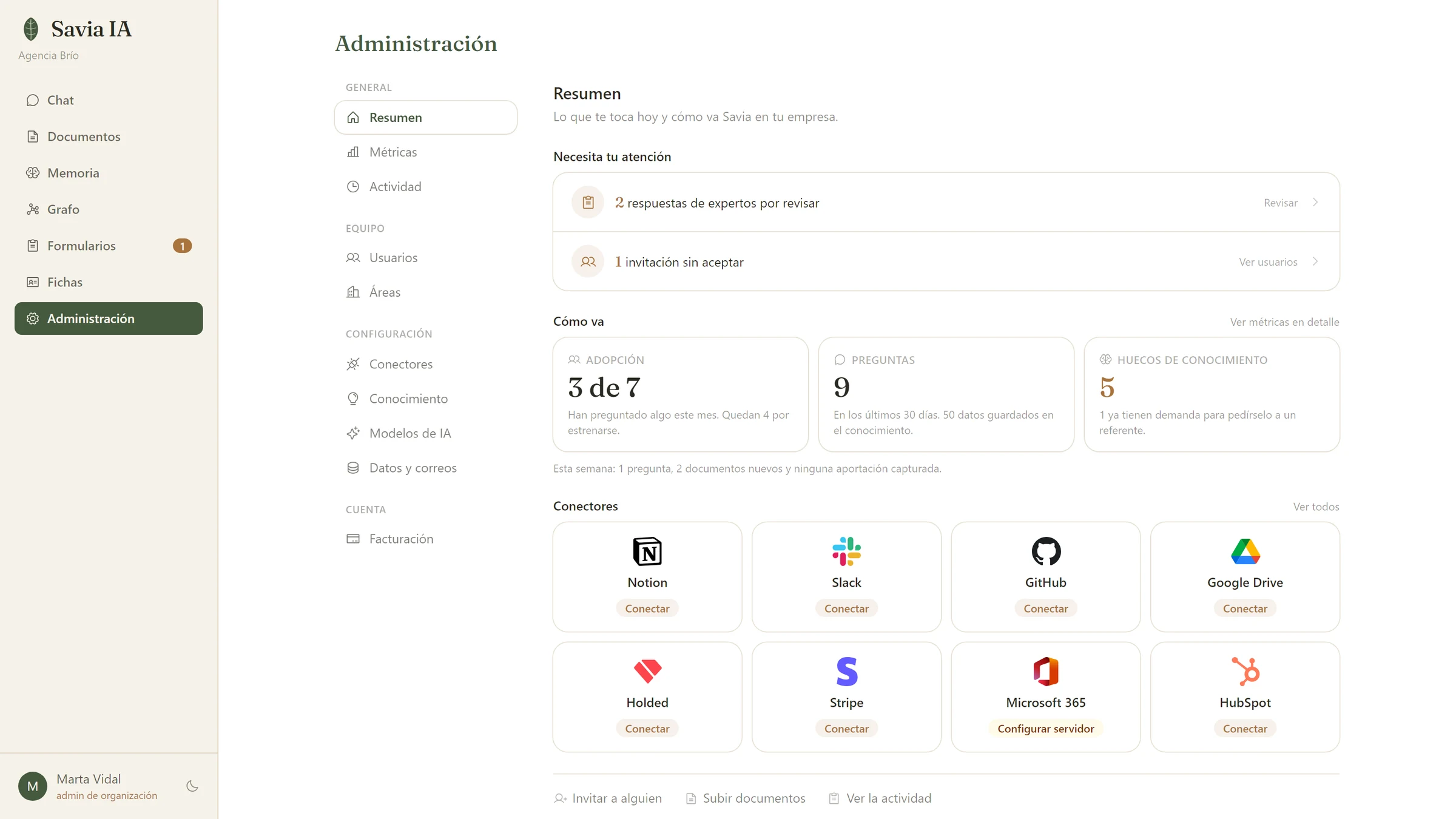
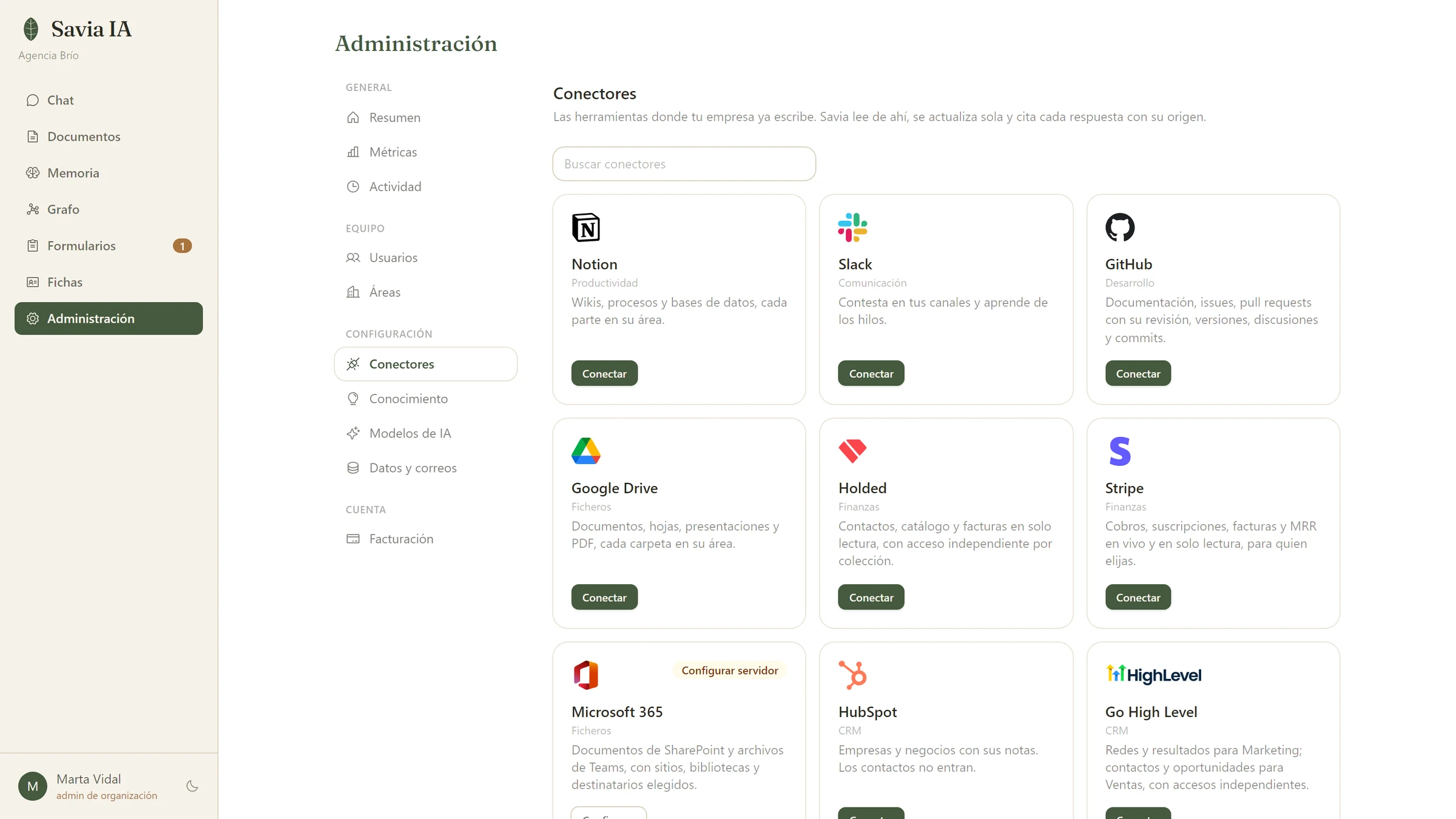
What is already written comes in on its own. There are around twenty connectors: Notion, Slack, GitHub, Confluence, Google Drive, SharePoint, Linear, Asana, ClickUp, monday, HubSpot, Attio, Granola and documentation sites, plus importing exported wikis. Nothing comes in unless it is chosen: the administrator picks which parts to bring and which area sees them. Stripe, Holded, Odoo and Go High Level are queried live, read-only and with per-person permissions. In Slack, the bot answers in channels and learns from threads; what it learns stays as testimony until the person who said it confirms it.
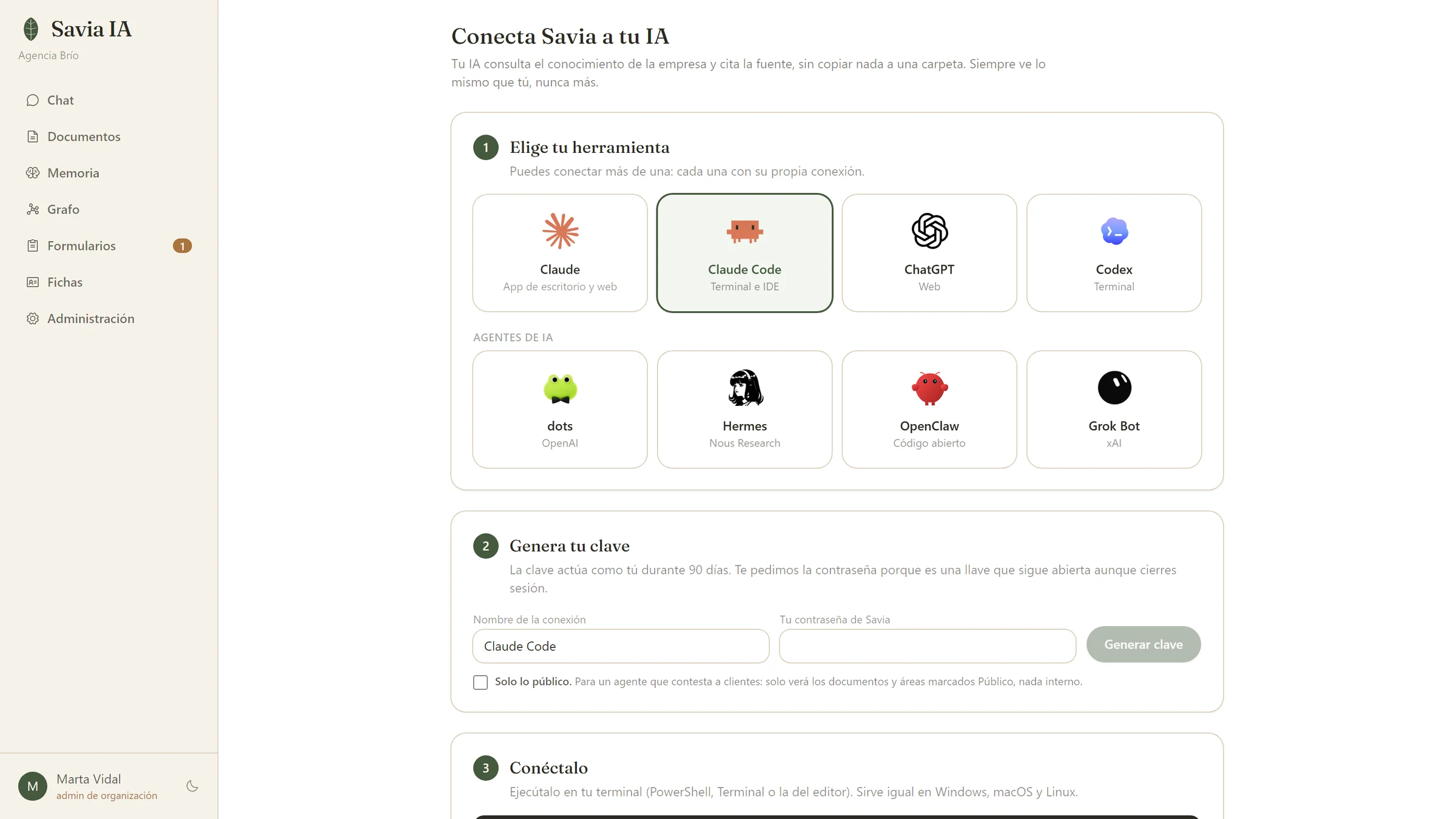
The knowledge also serves each person's own AI. Savia has its own MCP server, with OAuth 2.1 for Claude and ChatGPT and personal keys for Claude Code, Codex and other agents. Role and areas are read from the database on every call, each company decides whether to turn it on, and anything an external AI proposes always goes through review. In the chat itself, the model is chosen per conversation (Claude, GPT or Gemini, depending on what the company enables), and answers can be turned into Excel, Word or PDF files. Internal knowledge is kept apart from public knowledge: the key of an agent that talks to customers only sees what is marked as public.
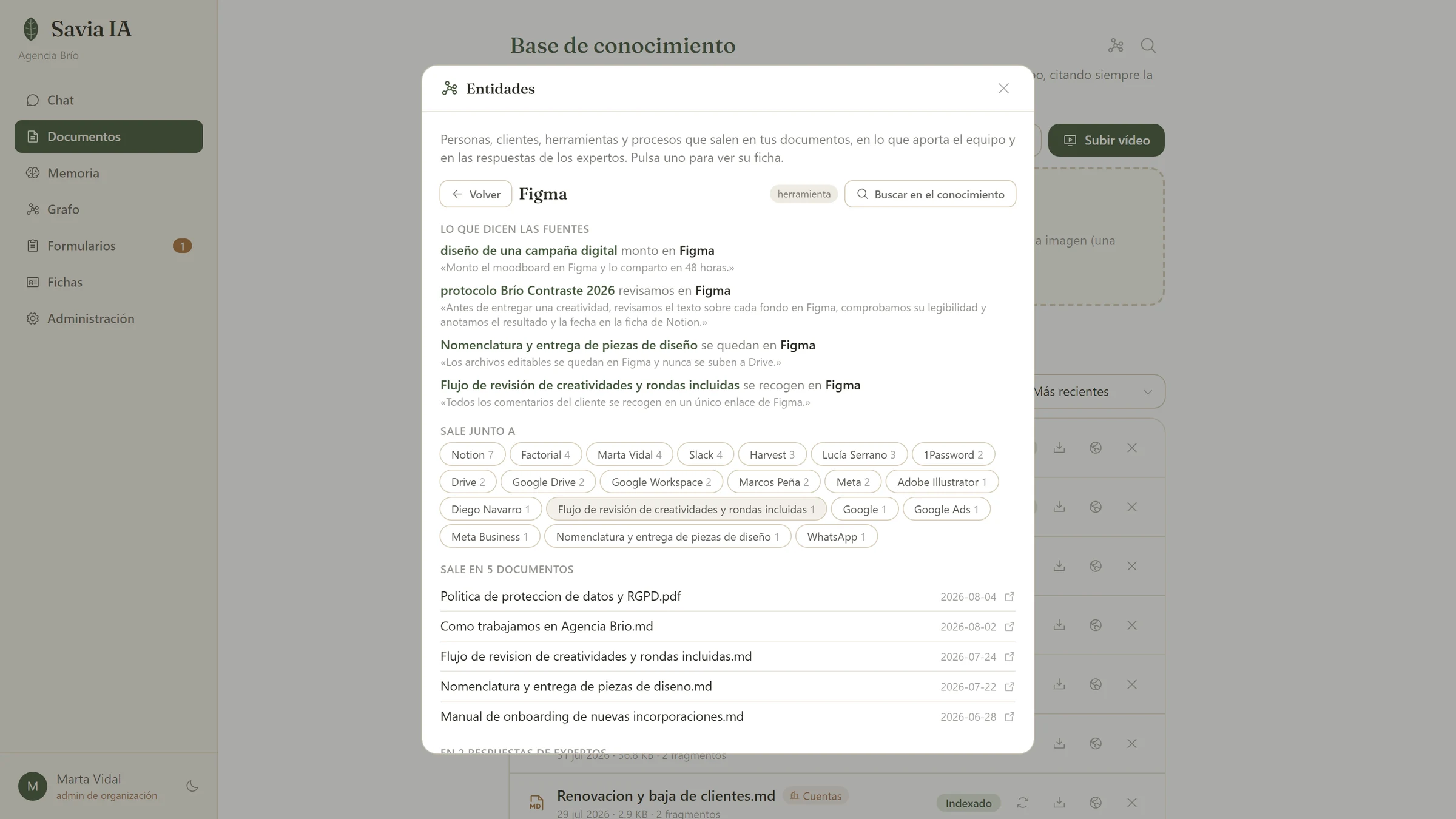
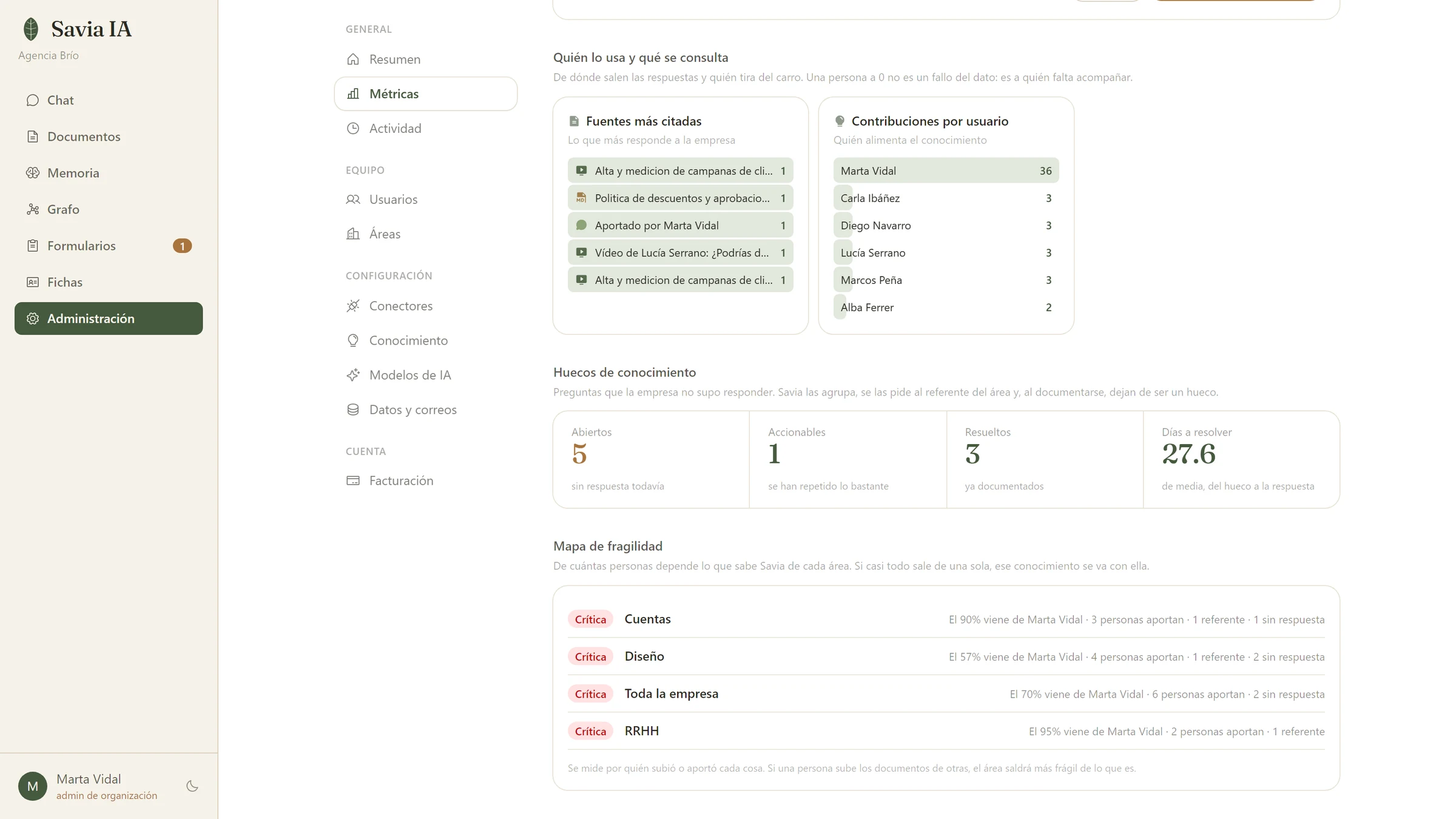
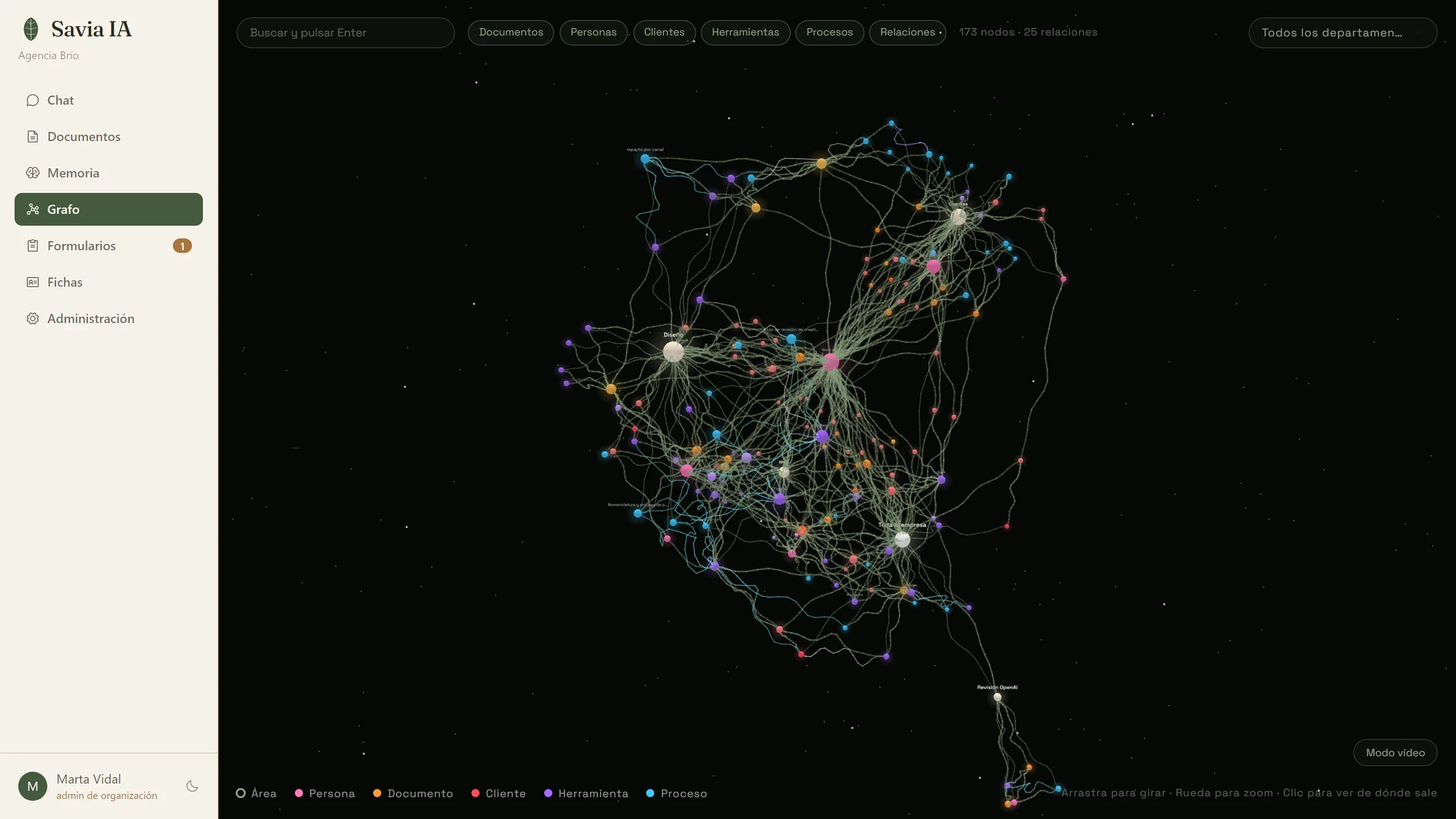
On top sits an entity layer: people, clients, tools and processes extracted from the sources, with relationships that are only stored when a literal sentence from the source backs them. That powers each entity's card, the "who knows about this?" search and the fragility map, which flags areas whose knowledge depends on a single person.
Underneath it is a multi-tenant SaaS built with FastAPI, Next.js and TypeScript, PostgreSQL and Qdrant. Isolation is double: Row-Level Security in Postgres and one vector collection per company, with a second lock per department. Sensitive employee data lives outside semantic search, with its own permissions. There is 2FA, an audit log and defences against instructions injected through documents. About 480 automated tests cover it.
Savia has been in production since July 2026 and is sold as a 90-day implementation, not a self-service sign-up. I founded the company and designed and built both the application and its website. All commercial information is on saviaia.es.
How it was built
- 01FastAPI · Python
- 02Next.js · TypeScript
- 03PostgreSQL · RLS
- 04Qdrant · RAG
- 05Claude · GPT · Gemini
- 06MCP · OAuth 2.1

Cover: Savia IA's public website. The screenshots show Agencia Brío, the demo company, in the production application · October 2026.
✓ Result
“A company memory that answers with sources, spots what is missing and asks the person who knows, also from Slack and from each person's own AI.”